Mike Tyson in his prime vs. heavyweight champion Oleksandr Usyk: Who will win?

Mike Tyson, one of the most iconic figures in boxing history, was known for his explosive and aggressive fighting style. His fast, powerful attacks aimed to finish fights quickly, often before the third round. However, modern boxing has evolved with a slower, more strategic approach. In this article, we will explore how Tyson’s aggressive fighting style compares to today’s heavyweight champions, including Tyson Fury, Anthony Joshua, and Oleksandr Usyk, and whether Tyson would be able to dominate in today’s era.
Mike Tyson’s Explosive Fighting Style
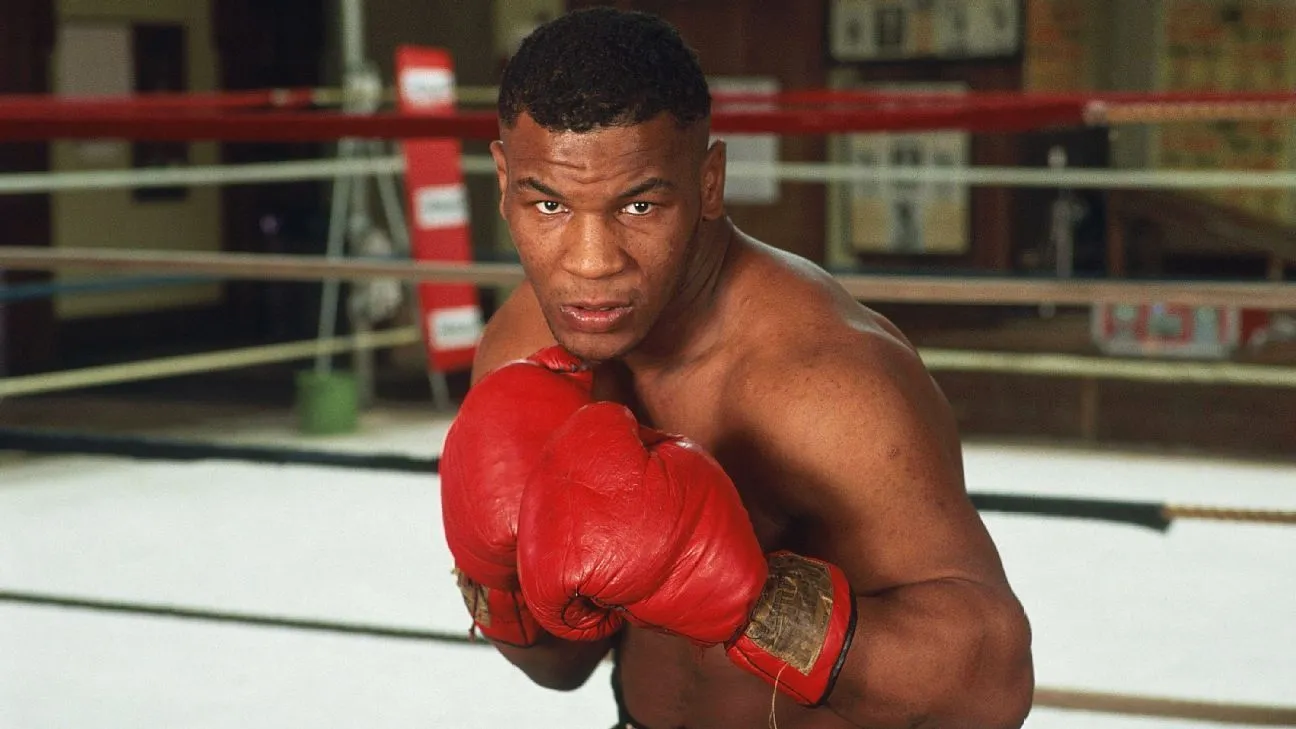
Mike Tyson’s success in the ring was built around his explosive style and ability to overwhelm opponents early. Tyson’s strategy was clear: finish the fight as quickly as possible. Standing at just 5’10”, Tyson was much shorter than many of his heavyweight opponents, which meant he had to close the distance quickly. His speed and powerful hooks allowed him to compensate for his lack of height and reach. Tyson’s ability to land quick, devastating punches made him one of the most feared fighters of his era.
However, Tyson’s style required intense physical effort, often draining his stamina before the later rounds. His fighting approach was exhausting, and if a fight went beyond the third round, his energy would rapidly diminish. Tyson’s early victories were largely due to his ability to finish fights quickly, but once an opponent survived his initial barrage, Tyson’s fatigue would become evident. This weakness became apparent in his later losses, where fighters used their longer reach and endurance to wear him down.
The Shift in Heavyweight Boxing Today
Today’s heavyweight boxing is marked by a shift toward strategic boxing and endurance. Modern fighters like Tyson Fury, Anthony Joshua, and Oleksandr Usyk prioritize maintaining distance, using footwork, and controlling the pace of the fight. These boxers don’t rely solely on power but rather focus on wearing down their opponents over time with precise jabs, defense, and stamina.
Unlike Tyson’s all-out aggressive approach, today’s heavyweights are more tactical, using their reach and movement to control the flow of the fight. For example, Tyson Fury’s 6’9” frame allows him to maintain distance from his opponents while landing jabs and moving fluidly around the ring. Fury’s ability to box with such agility and use his size effectively would pose significant challenges for Tyson, whose style relied on explosive bursts and close-range combat.
The Challenge of Facing Taller, More Skilled Opponents
One of Tyson’s advantages was his ability to get inside taller opponents’ jabs and land powerful hooks. However, in today’s heavyweight division, many top fighters are significantly taller and more skilled at maintaining distance. For instance, Oleksandr Usyk, standing at 6’3”, has shown remarkable skill in dealing with taller opponents. Usyk’s ability to dominate fighters like Joshua and Fury is due to his technical proficiency and speed, which allowed him to neutralize opponents’ size and reach advantages.
In contrast, Tyson, at 5’10”, would face significant challenges against fighters who are not only taller but also better equipped to manage distance and outlast him in later rounds. Today’s fighters, like Fury, are much more adept at controlling the action with footwork and quick jabs, rendering Tyson’s typical tactics less effective. Tyson’s lack of reach and stamina could make it difficult for him to get inside against these more skilled, taller opponents.
Tyson’s Legacy and the Current Heavyweight Landscape
Despite the evolution of boxing, Tyson’s legacy as one of the greatest heavyweights in history remains intact. His combination of speed, power, and aggression was unmatched in his era. However, modern boxing has evolved toward a more measured approach, where stamina, intelligence, and adaptability play a more significant role than raw power alone. Fighters like Tyson Fury and Oleksandr Usyk have redefined what it takes to succeed in the heavyweight division.

Tyson’s explosive power and early-round dominance were essential in his reign as champion, but modern heavyweights like Usyk are more skilled and tactical. Usyk, in particular, has demonstrated how technical boxing can overcome size and power. His victories over both Joshua and Fury showcased his ability to box intelligently and adapt to his opponent’s style—qualities Tyson would need to contend with in today’s heavyweight scene.
Conclusion
Mike Tyson’s all-or-nothing approach made him one of the most dominant and feared boxers of his time. However, today’s heavyweights, such as Tyson Fury, Anthony Joshua, and Oleksandr Usyk, have adopted a more strategic approach that emphasizes stamina, skill, and reach over sheer power. Tyson’s aggressive style would likely struggle against these modern fighters, who are more adept at controlling the pace and neutralizing Tyson’s explosive attacks.
While Tyson may face difficulties in today’s heavyweight division, his legacy as one of the greatest boxers of all time remains unshaken. The rise of fighters like Oleksandr Usyk, who blends skill, speed, and strategy, has transformed the heavyweight division into one that requires more than just raw power to succeed. Despite the changing landscape, Tyson’s impact on the sport of boxing will forever be remembered.


Post Comment